Facing the reality of unsafe abortions in Benin
For many years in Benin, unsafe abortion was a silent and devastating reality. Each year, nearly 500 women and girls lost their lives, not because of rare diseases or unavoidable medical complications, but due to clandestine and unsafe abortion procedures carried out in secrecy and fear.
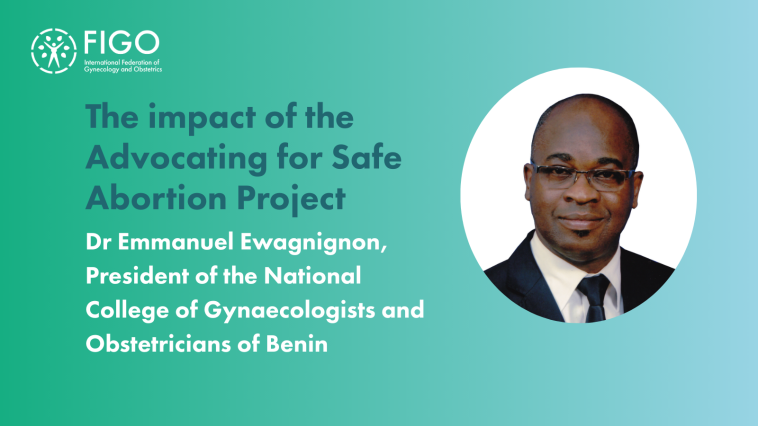
Dr Emmanuel Ewagnignon, President of the National College of Gynaecologists and Obstetricians of Benin (CNGOB), witnessed these consequences firsthand.
“As doctors, we were receiving women who had perforated their uteruses or used toxic substances to induce abortion. These dangerous methods severely damaged their bodies. Many did not survive,” he explained.
According to Dr Ewagnignon, the problem was not a lack of awareness. It was silence reinforced by stigma, tradition, and fear of legal consequences.
Turning shock into change
With support from FIGO, CNGOB launched the Advocating for Safe Abortion Project. The goal was not to promote abortion, but to prevent avoidable deaths.
The strategy was simple but bold: engage everyone. Community members, hairdressers, domestic workers, religious leaders, lawyers, magistrates, police officers, and politicians were all included in open discussions about the realities of unsafe abortion.
In some cases, lawmakers were shown medical images illustrating the severe consequences of unsafe procedures. The aim was not to shock unnecessarily, but to make denial impossible and to create space for policy reform.
When beliefs meet reality
In Benin, abortion had long been considered morally unacceptable in most circumstances. Religious leaders, particularly within the Catholic community, had historically opposed reform.
However, the human cost became increasingly difficult to ignore.
“The women dying of unsafe abortion practices are our wives, daughters, sisters, and mothers. If someone you love is in danger of losing her life, would you let her die?” Dr Ewagnignon asked.
Gradually, attitudes began to shift. While not everyone changed their beliefs, there was growing recognition that the law must allow space for compassion and the protection of life.
A law that saves lives
Benin already had a sexual and reproductive health law, but advocacy efforts led to significant revisions. After intense debate and political negotiations, a revised law was adopted and later promulgated by the President of the Republic.
The law allows safe abortion under clearly defined conditions up to 12 weeks of pregnancy.
The impact was immediate. Unsafe abortions declined, healthcare providers felt legally protected, and women were no longer automatically condemned. Lives were saved.
Beyond legislation
Implementation remains a challenge. Awareness of the revised law is still limited, even among magistrates responsible for enforcing it. Misinformation continues to circulate, and some individuals warn women that seeking legal abortion care could lead to arrest.
Nevertheless, progress continues. The Ministry of Health now requires healthcare providers who object to abortion to formally declare their objection and refer patients without delay. Facilities are being assessed and authorized to provide safe abortion care.
For Dr Ewagnignon, the impact of the project extends beyond legal reform. With FIGO’s support, CNGOB strengthened its leadership, management, and advocacy capacities.
“Before, we were just health professionals. Now, we can manage projects, advocate, lead, and effect change,” he said.
Ultimately, the goal remains clear: to protect women and girls from preventable death and ensure that compassion and evidence guide public policy.
Source: FIGO – Facing the reality of unsafe abortions in Benin