Culture War: The Far Right’s Playbook on Abortion
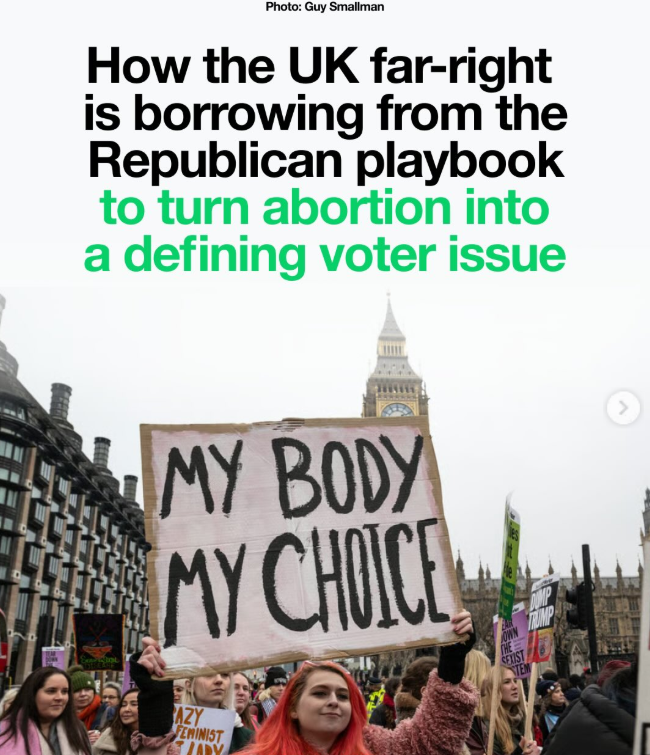
Abortion is increasingly becoming a central issue in the political discourse of far-right movements in the United Kingdom. Rather than being discussed solely as a matter of healthcare and individual rights, it is increasingly framed within broader debates about family, national identity, birth rates and the future of society.
In an article published by the British organisation Abortion Rights, author Manna Mostaghim examines how political discussions about family and declining birth rates can be used to challenge reproductive rights. According to the analysis, some far-right groups link falling birth rates to demographic decline and perceived threats to British national identity.
In this context, encouraging people to have children takes on a political dimension. Having and raising children is presented as a responsibility towards the nation, while reproductive autonomy, including the right to decide whether to continue a pregnancy, can be portrayed as an individual choice that goes against the collective interest. The author warns that such messages can turn personal decisions about pregnancy into subjects of political and social pressure.
The article refers to parties such as Reform UK and Restore Britain in the context of growing conservative rhetoric about family and national values. However, the author points out that it remains unclear to what extent these parties would turn such ideas into concrete policies or regulations intended to support families. There is therefore a distinction between the political messages being promoted and the measures that might actually be introduced.
This development is taking place amid wider debates about abortion in British politics. An investigation published in May 2026 by openDemocracy and The Fuller Project examined 78 accounts on X associated with Reform UK politicians, party supporters and far-right influencers. It found that mentions of abortion increased by more than 40% between April 2024 and April 2026 compared with the previous two years. The investigation also identified an increase in the sharing of misleading claims about abortion law.
One important concern is the way certain arguments gradually enter public debate. Messages about protecting families, traditional values or national interests may initially appear unrelated to reproductive rights. However, when they are linked to the idea that women have a duty to have children for the benefit of the state or society, they can contribute to challenging individual autonomy.
The Abortion Rights analysis is part of a wider discussion about the relationship between politics, birth rates and reproductive rights. It highlights the importance of monitoring not only explicit legislative proposals but also the political narratives and arguments that can influence how society understands the right to abortion.
Access to abortion services and the right of every person to make informed decisions about their reproductive health remain important issues for healthcare systems and the protection of individual rights. Discussions about family and birth rates should not replace respect for people’s autonomy when making decisions about pregnancy.
Original source: Abortion Rights, “Culture War! The Far Right’s Playbook on Abortion”.
Additional analysis: openDemocracy and The Fuller Project, “Abortion is becoming a new front in Reform UK’s culture war”.