When Abortion Becomes a “Luxury”: A Glimpse Into Russia’s Demographic Anxiety
In recent years, conversations around reproductive rights in Russia have taken on a sharper, more urgent tone, shaped by a growing concern over the country’s declining population. That anxiety surfaced once again this week when a regional governor made a statement that resonated far beyond his administrative borders.
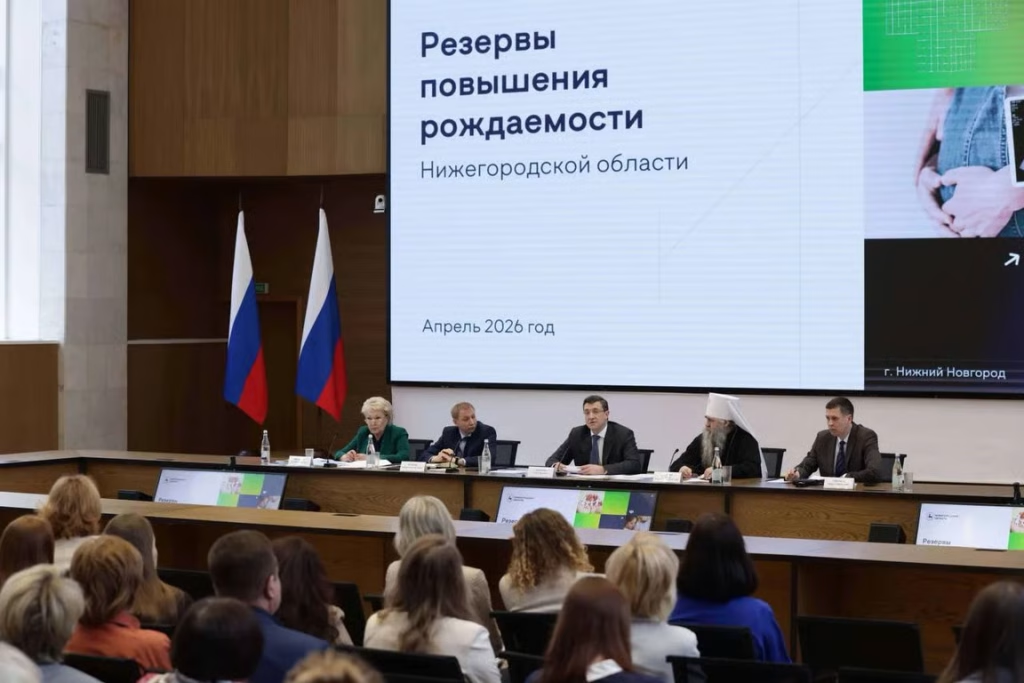
Speaking at a public event focused on boosting birth rates, Governor Gleb Nikitin of the Nizhny Novgorod region described access to elective abortion as “too much of a luxury” in the context of Russia’s demographic crisis. His words reflect a broader narrative that has been steadily gaining traction within political circles: the idea that reproductive choices are not merely personal decisions, but matters tied directly to national survival.
The governor pointed to recent figures as evidence of what he framed as progress. According to regional data, the number of elective abortions performed in state clinics dropped by around 30% in 2025 compared to the previous year and has fallen dramatically over the past decade. Yet, for Nikitin, these reductions are not enough. The goal, he suggested, is not to impose outright bans, but to continue discouraging abortion through what he described as “care, responsibility, and high-quality work” with patients.
Behind this language lies a more complex reality. Across Russia, authorities have increasingly implemented measures that limit access to abortion services without formally outlawing them. These include public campaigns against abortion, tighter regulations on clinics, and a significant reduction in the number of private facilities licensed to perform the procedure. In the Nizhny Novgorod region alone, the number of such clinics reportedly dropped from 55 to just nine within a year.
This approach reflects a broader national strategy. Rather than introducing a sweeping federal ban, policies are often enacted at the regional level, creating a patchwork of access that varies widely across the country. In practice, this can make abortion increasingly difficult to obtain, even when it remains legal on paper.
The framing of abortion as a “luxury” reveals more than a political position. It signals a shift in how reproductive rights are being discussed, moving away from individual autonomy toward demographic necessity. For many observers, this raises important questions about the balance between state interests and personal freedoms, particularly in a context where healthcare decisions are becoming intertwined with national policy goals.
As Russia continues to grapple with population decline, it is likely that debates around abortion will only intensify. What remains uncertain is how far these policies will go, and what they will ultimately mean for those whose lives are most directly affected.
Original source: Read the full article