Can the EU Guarantee Safe Abortion Access for Women Across Europe?
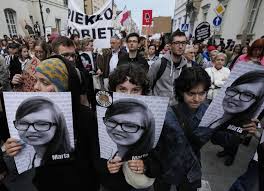
Across the European Union, access to safe abortion remains deeply unequal. In countries such as Poland and Malta, abortion is permitted only under extremely limited circumstances, leaving millions of women without the ability to decide freely over their reproductive health.
In Poland, the consequences of restrictive legislation are stark. In 2024, 99 percent of abortions reportedly took place outside hospitals and outside the legal framework, forcing women to seek alternatives that are often unsafe, unsupervised, or prohibitively expensive. Some travel abroad to access care, while others rely on abortion pills ordered with the support of NGOs — an option that is not medically suitable in all cases and remains inaccessible for many due to cost.
Against this backdrop, a major political debate is unfolding in Brussels. The European Parliament has called for the creation of a European solidarity mechanism that would ensure every woman in the EU can access safe and free abortion care, regardless of where she lives. The idea is to support countries that provide abortion services to women from other member states through EU funding, without interfering with national abortion laws.
This proposal has gained momentum through the My Voice, My Choice citizens’ initiative, which gathered 1.2 million signatures and received backing from the European Parliament. As a result, the European Commission is expected to present a concrete response by March.
Opposition has come mainly from far-right political groups, who argue that the EU has no competence in abortion policy. However, the European Commission has clarified that safe sexual and reproductive healthcare falls under the EU Charter of Fundamental Rights, and is therefore grounded in EU treaties.
Critics also claim the initiative would interfere with national legislation or doctors’ rights to conscientious objection. Supporters counter that the mechanism would be entirely voluntary, would not change national laws in countries like Poland or Malta, and would not impose obligations on countries where abortion is already legal.
As French MEP Mélissa Camara (Greens/EFA) put it, the debate is not a technical or legal one, but an ideological choice: whether to listen to women affected daily by the lack of access to abortion, or to allow opponents of women’s rights to shape EU policy.
While legal grounds appear increasingly clear, the key challenge now lies in EU budget decisions — traditionally one of the most difficult areas of agreement. Still, supporters argue that the funding required would be modest compared to the overall EU budget, keeping hopes alive that the initiative will move forward.
Whether the EU will finally ensure safe abortion access across borders remains to be seen, but the coming weeks could mark a decisive moment for women’s rights in Europe.
Source:
EUobserver – Can Brussels ensure safe abortion for women everywhere in the EU?