Malta’s Lockbox Campaign: When Access to Abortion Care Moves Beyond the Health System
In a European context where access to reproductive healthcare is increasingly shaped by both legal frameworks and innovative service delivery models, recent developments in Malta highlight the tensions that emerge when formal systems fail to meet patient needs. A campaign led by the organization Women on Waves has introduced a new and highly unconventional approach to abortion access by placing lockboxes containing abortion pills in undisclosed locations across the country, offering a form of decentralized, community-based access in one of the most restrictive legal environments in Europe.
The initiative consists of approximately fifteen lockboxes distributed across the Maltese islands, each containing medication used for early medical abortion and accessible through codes provided via email to individuals under nine weeks of pregnancy seeking termination. In the first days following the launch, multiple women reached out to access the service, indicating a level of unmet need that has long been documented but rarely made visible in such immediate terms.
Malta’s legal framework remains one of the strictest in Europe, permitting abortion only in cases where a woman’s life or health is at serious risk, and even then under tightly controlled conditions requiring multiple medical approvals. Outside these narrow exceptions, abortion remains criminalized, including in cases of rape, incest, or severe fetal impairment, creating a context in which access to care is often displaced beyond national borders or into informal and legally precarious pathways.
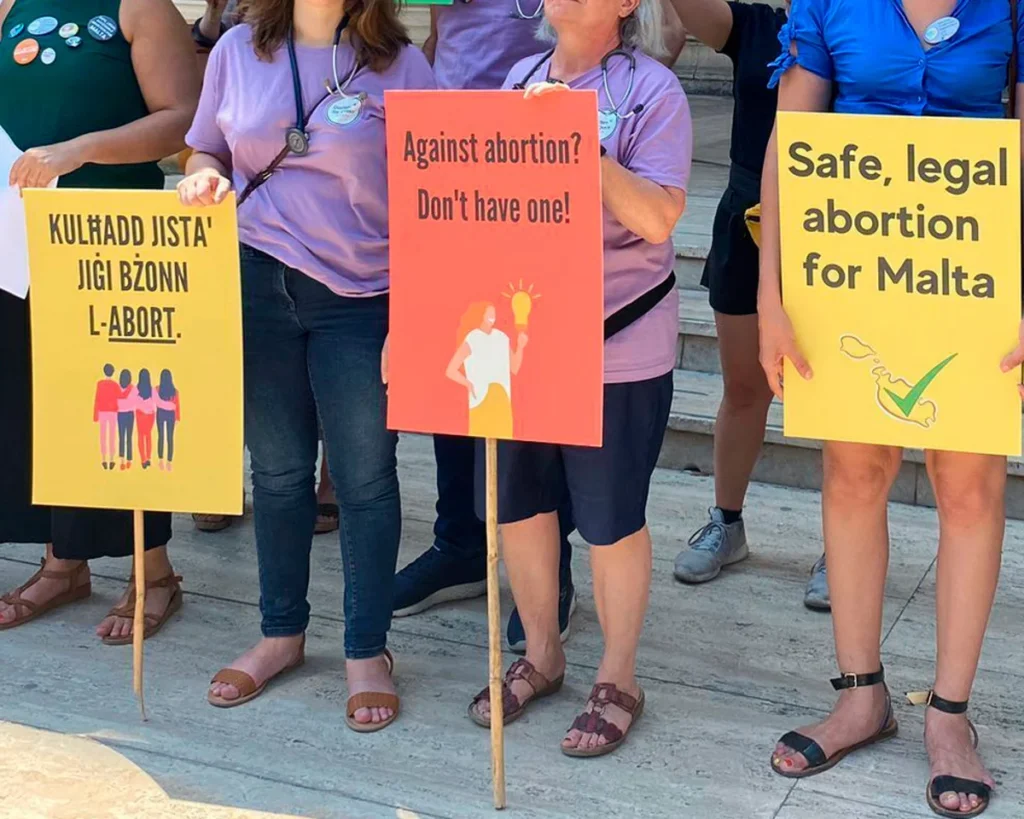
Within this restrictive environment, the lockbox campaign can be understood not only as a form of direct service provision, but also as a deliberate act of advocacy that exposes the disconnect between legal structures and lived realities. Data from local advocacy groups suggests that hundreds of women in Malta already access abortion pills through online providers each year, while others travel abroad at significant personal and financial cost, reinforcing the notion that restrictive laws do not eliminate abortion but instead reshape how and where it occurs.
The campaign has generated significant controversy, with opponents raising concerns about legality, safety, and accountability, and calls for investigation by authorities. At the same time, healthcare professionals and advocates have emphasized that criminalization itself introduces risk, particularly when women may hesitate to seek post-abortion care due to fear of legal consequences. This dynamic raises critical questions for clinical practice, including how to ensure continuity of care and patient safety in contexts where legal constraints interfere with standard medical pathways.
From a systems perspective, the emergence of such initiatives reflects a broader global pattern in which access to abortion care increasingly intersects with telemedicine, cross-border provision, and community-based distribution models. For professionals working in sexual and reproductive health, the Maltese case illustrates how gaps in formal healthcare systems can give rise to alternative mechanisms of access that operate at the margins of legality but within the framework of public health need.
Ultimately, the lockbox campaign represents more than a singular intervention; it is a signal of systemic tension between regulation and reality, and a reminder that access to reproductive healthcare continues to evolve in response to both constraints and demand.
Original source (in English): https://www.theguardian.com/world/2026/apr/27/pro-choice-campaign-malta-lockboxes-containing-abortion-pills