Reproductive Pressure in Russia: Abortion Restrictions and the State’s Demographic Strategy
In early 2026, the State Duma prepared to review draft legislation that would require women to notify their husbands, and in some cases recent ex husbands, before terminating a pregnancy. The proposal would amend the federal law “On the Fundamentals of Health Protection of Citizens,” stating that while a woman independently decides whether to become a mother, abortion would require her informed consent and notification of her spouse, or of an ex husband if the divorce occurred within the previous twelve weeks.
Lawmakers argue that decisions about pregnancy should be made jointly by spouses, citing provisions of the Family Code that emphasize spousal equality in family matters. They claim that notification requirements could reduce abortion rates.
This proposal emerges amid a broader state campaign to increase birth rates. According to reporting summarized by Meduza from the independent outlet 7×7, Russian authorities have intensified measures discouraging abortion and promoting motherhood as a social norm rather than a personal choice.
In several regions, clergy from the Russian Orthodox Church have been formally assigned to women’s health clinics to counsel patients against abortion. In Saratov, a metropolitan instructed that every clinic have a priest available to speak with women considering the procedure. In the Vologda region, weekly prayer services have been held at a perinatal center before an icon known as the “Helper in Childbirth.”
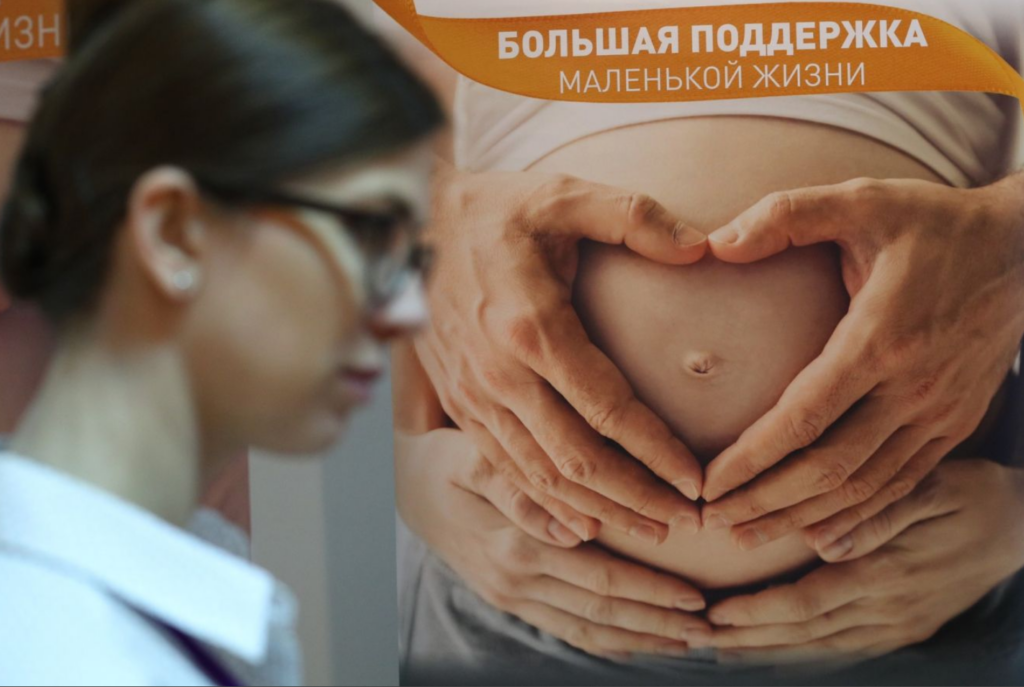
Women seeking abortions in state facilities are often directed to mandatory pre abortion counseling. Reports describe the use of emotionally charged messaging, including presentations of fetal figurines and appeals framed around moral responsibility. Some counselors have told couples that if a man decides the pregnancy should continue, the woman will give birth.
At the same time, regional laws banning so called “incitement to abortion” have been adopted in more than twenty regions and in St. Petersburg. These measures define incitement broadly, potentially restricting doctors, relatives, or partners from offering advice. In one case, a man was fined after offering to pay for an abortion for his pregnant partner.
Access to services has narrowed. Since 2024 and accelerating in 2025, private clinics in more than fifty regions have reduced or stopped providing abortions, leaving the procedure available primarily in state hospitals where counseling is mandatory. Some women have traveled to other regions to obtain care, increasing financial and logistical burdens.
Federal authorities have also restricted online information. The state communications regulator has blocked websites accused of promoting refusal of childbirth.
Alongside restrictions, officials have promoted motherhood as a patriotic and fashionable choice. During a public appearance in December 2025, President Vladimir Putin said that having children should become fashionable. Regional authorities have introduced financial payments for pregnant students, including teenagers, framing them as support for girls in difficult circumstances.
Women’s rights advocates argue that these measures are unlikely to significantly raise birth rates but may increase pressure, stigma, and health risks, particularly for women facing domestic violence or reproductive coercion. International bodies such as the World Health Organization and the United Nations maintain that reproductive decisions should be made without third party involvement and view mandatory spousal consent as discriminatory.
Source:
https://meduza.io/en/cards/draft-legislation-in-russia-would-require-women-to-notify-their-husbands-sometimes-even-their-ex-husbands-before-terminating-a-pregnancy
https://meduza.io/en/feature/2026/01/06/if-the-man-decides-the-woman-will-give-birth