Europe Continues to Advance on Abortion Rights, but Access Barriers Remain
New analysis from the Center for Reproductive Rights shows that Europe is making steady progress in abortion law reform, with an increasing number of countries aligning their legal frameworks with international human rights and public health standards. Yet despite these advances, significant barriers to access persist across the region, and a few countries continue to enforce highly restrictive laws.
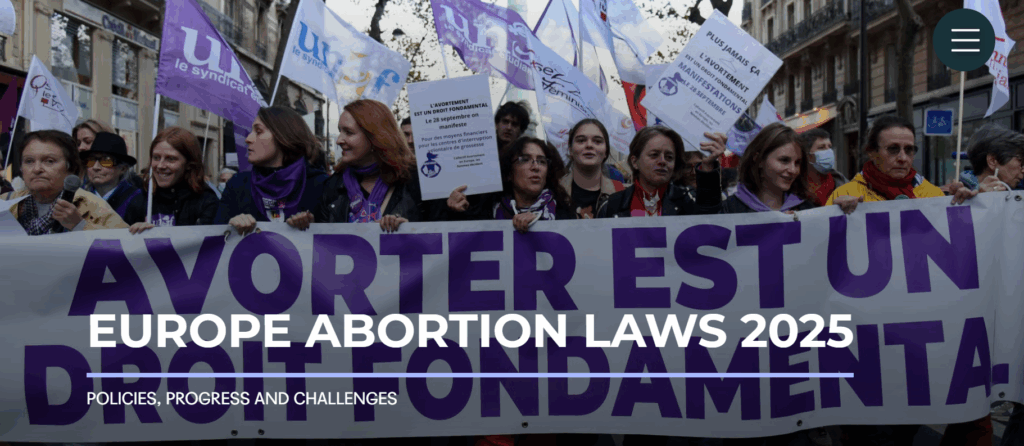
Published ahead of International Safe Abortion Day, the report Europe Abortion Laws 2025: Policies, Progress and Challenges provides a comprehensive, data-driven overview of abortion law and policy in 49 European countries. It highlights recent reforms, legislative trends, and ongoing gaps that undermine access to care.
Progress Across Europe
According to the report:
-
43 out of 49 countries now allow abortion on request at least during early pregnancy.
-
Over the past decade, 20 countries have enacted meaningful reforms to remove harmful barriers.
However, access remains difficult in some countries due to mandatory waiting periods, biased counselling requirements, and high out-of-pocket costs.
Meanwhile, five countries—Poland, Malta, Andorra, Liechtenstein, and Monaco—maintain highly restrictive laws, forcing many women to seek abortion care abroad or outside legal pathways. In seven countries, new regressive barriers have been introduced, moving them away from the trend toward liberalization.
Call for Action
“Data clearly shows that many countries in Europe are improving abortion laws and policies in line with international human rights and WHO guidelines,” said Leah Hoctor, Vice President for Europe at the Center for Reproductive Rights. “However, too many women still face harmful legal obstacles that endanger their health and delay access to care. International Safe Abortion Day is a moment for governments to recommit to removing these barriers and ensuring timely, affordable, and high-quality abortion services.”
The report also sets out clear recommendations for national governments to align laws with international obligations and clinical best practices, and calls on the European Union to play a stronger role in safeguarding reproductive rights, including:
-
Issuing guidance to Member States
-
Monitoring risks of regression
-
Supporting cross-border access to care
About the Analysis
The report is based on a comprehensive review of national laws, policies, and regulations across Europe, relying on official legal texts rather than secondary reporting. This ensures the most accurate, up-to-date, and authoritative assessment of abortion law and policy in the region.
Source & full report: Center for Reproductive Rights